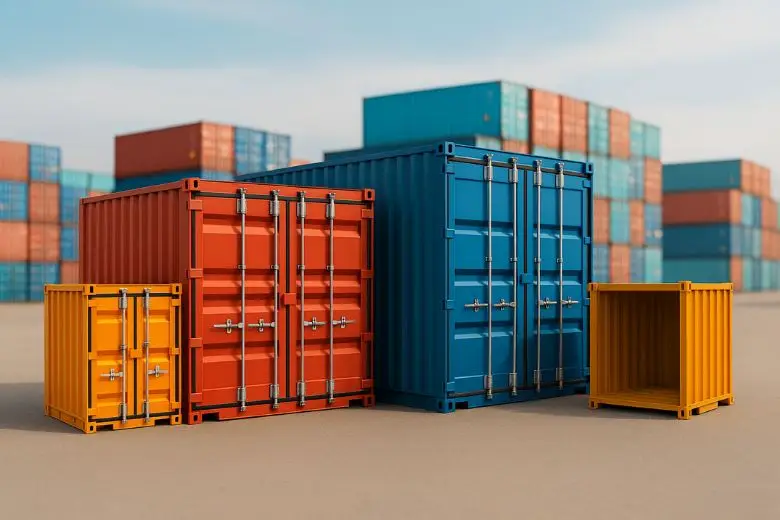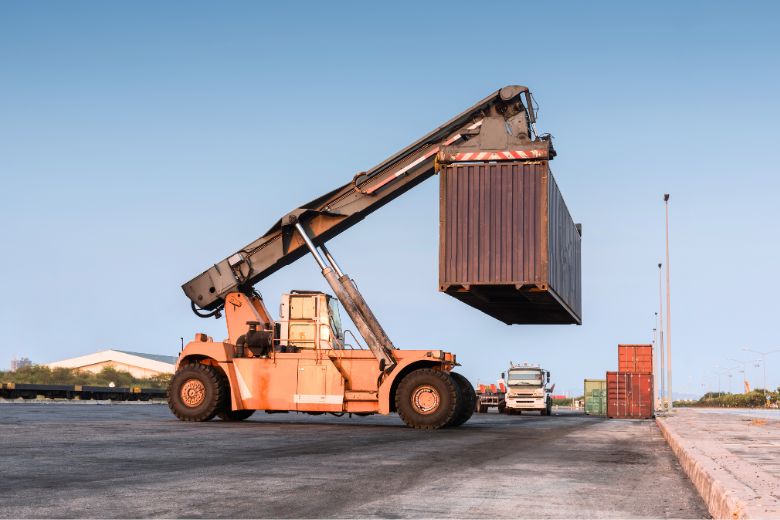
Have you ever wondered why a 20-foot sea container is not really 20 feet long? The answer lies in ISO 668: a global standard for how containers are built and measured. In this article, we’ll look at what ISO 668 is and how it helps shape intermodal transportation as we know it.
What is ISO 668?
ISO 668 is an international standard that defines the external dimensions, weight limits and structural requirements for freight containers used in intermodal transportation. First published by the International Organization for Standardization (ISO) in 1968, the regulation established standardized container sizes that enabled intermodal trade and today allow the liner shipping industry to transport an estimated 3.4 trillion euros worth of goods per year.
Freight transportation before ISO 668
The history of container transportation begins in the 18th century, when standardized wooden crates were used to transport coal within the mining regions of England and Wales. By the early 1900s, this idea had evolved into closed containers – made of wood or iron – that could be transported by rail or road, laying the foundations for modern intermodal shipping.
The first international container standard appeared in 1933, created by the Bureau International des Containers et du Transport Intermodal (BIC) in an effort to standardize containers used for trade between European countries. This early framework had significant limitations by modern standards: Containers were not stackable, nor were they designed for intercontinental or intermodal use.
In the 1950s, Malcolm McLean’s “sea-land container” and advances in telecommunications sparked interest in creating a “common language” for containerized transportation. Container sizes, corner fittings and designs still varied widely by region and cargo often had to be unloaded from one container and reloaded into another, adding time, cost and safety risks to the transportation process.
In 1968, the ISO Technical Committee 104 (ISO/TC 104) established ISO 668 and introduced the standardized container dimensions, fittings and tolerances that make intermodal transport possible today.
ISO 668 specifications
ISO 668 specifies size and weight requirements for Series 1 containers used in intercontinental transportation, including:
- External dimensions and tolerances
- Minimum sizes for door openings (if applicable)
- Maximum gross weight classifications
- Load transfer ranges (from 2005)
These specifications ensure that containers are compatible with ships, railroad wagons, chassis and handling equipment worldwide.
ISO 668 works closely with ISO 1496, which defines internal dimensions, structural strength and test criteria. Together, they ensure that containers are not only the right size, but also strong and safe for stacking, lifting and transportation.
External dimensions of shipping containers
ISO 668 describes the external lengths, widths and heights of Series 1 freight containers. Like other ISO standards, ISO 668 predominantly uses the metric system for the external dimensions of shipping containers, although imperial dimensions are now also included. We have listed the most common shipping container dimensions here as a guide – but please refer to the latest edition of ISO 668 for current dimensions and tolerances.
As defined in ISO 668, all Series 1 containers have a uniform width of 2.438 meters (8 feet). However, their lengths are slightly shorter than their nominal designations. For example, the length of a 20-foot container is actually 19 feet 10½ inches, with a dimensional tolerance of only ¼ inch (more on this below). This allows twistlock couplings to connect shorter containers to form exact multiples of 40 feet, ensuring that the four outer corner fittings are perfectly aligned with the containers above or below them when stacked.
Dimensional tolerances
ISO 668 also defines dimensional tolerances for ISO shipping containers. According to the standard, the maximum permissible dimensional tolerances are
- +0 / -0.25 inch for a 20-foot shipping container
- +0 / -0.375 inch for a 40-foot shipping container.
These tight tolerances ensure that shipping containers fit securely on ships and chassis while allowing for minor production differences between manufacturers.
ISO 668:2020 and related standards
The latest edition of the standard, ISO 668:2020 (7th edition), was published in 2020, with a two-page amendment added in 2022. ISO standards are usually reviewed every five years. Therefore, ISO 668 is currently under review to ensure that it continues to reflect modern shipping practices.
Other relevant ISO container standards include:
- ISO 830: Freight containers – Technical terms
- ISO 1161: Series 1 freight containers – Corner fittings – Specification
- ISO 6346: Freight containers – Coding, identification and marking
- ISO 17712: Cargo containers – Mechanical seals