
Important Notice: Shipping Container Scams
Currently, unknown third parties are sending emails impersonating CHS or our employees. Some of these messages contain PDF files with purported container offers. These emails and offers are not from us.
If you are unsure, please do not make any payments. Carefully check the sender’s full address, the recipient’s name, and the bank details provided. Also, compare the company name, address, commercial register number, and VAT identification number with the information in our legal notice.However, please be aware that scammers can also copy genuine company information. Therefore, if in doubt, always verify the authenticity of an offer using the official contact details on our website – and not via phone numbers, links, or email addresses from the suspicious message.
Just a few years ago, it would have been almost unimaginable to order a 40-foot container online with just a few clicks and have it delivered directly to your desired location. Today, this is easily possible. But now that buying containers is simpler and more convenient than ever this also unfortunately opens up new opportunities for fraudsters. With professionally designed websites, deceptively authentic emails, and seemingly attractive offers, fakes are not always immediately recognizable.
Fraud losses in Germany have reached record levels in recent years, so it is worth exercising a little more caution when buying online – especially when making a purchase worth several thousand euros, such as a shipping container.
This guide will show you how to check container suppliers, correctly assess the condition and value of a container, and how to best protect your payment throughout the entire purchasing process.
But first, some context.
Why Do Online Container Scams Exist?
There are three main reasons why online scammers are attracted to the container market.
- It is a niche industry that largely operates offline. This can make it difficult for first-time buyers to recognize what is common practice and what deserves a closer look.
- Containers are expensive, one-time purchases. Most people are buying a single container for private use. As a result, they often have limited experience with reputable brands and dealers.
- There is a time period between payment and delivery. Because customers don’t expect their container to be delivered Amazon-fast, fraudulent sellers have more time to stall or disappear before a buyer realizes something is wrong.
Avoiding Container Scams: A Step-by-Step Guide
Step 1: Vet the provider
Before diving into discussions about price or availability, make sure that the company you wish to buy from is a reputable retailer with a verifiable business history.
Check the Website
In addition to checking the legal notice, also check the website address. For .de domains, you can use the DENIC domain lookup to find information such as the registration date and technical details. For other domain extensions, the free ICANN Lookup is a good option.
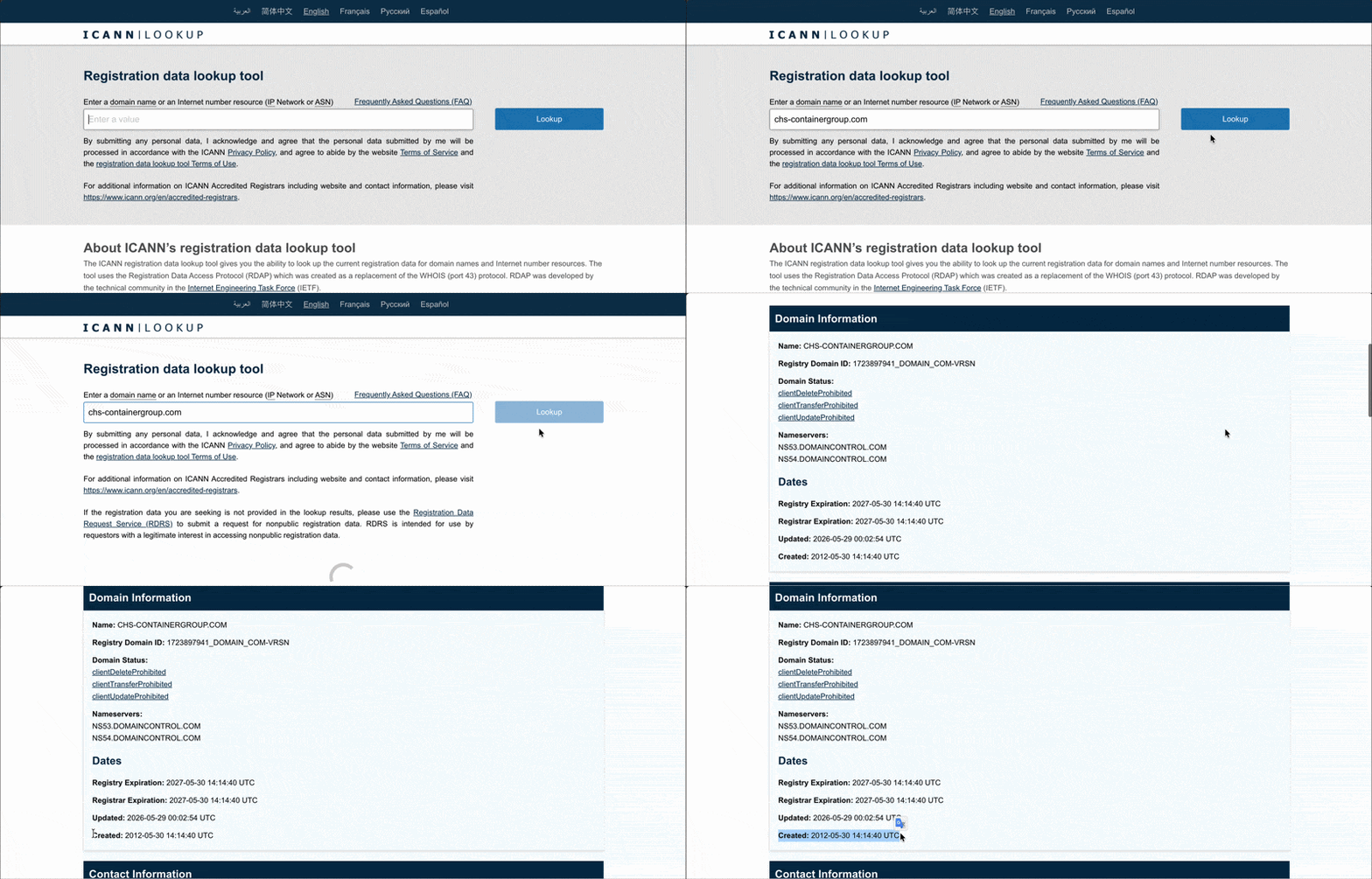
It’s also important to take a critical look at the website content itself. While many established container companies operate functional, simple websites, all should offer evidence of a good reputation, clear contact information, a physical address, and signs of a real team behind the company. Look for an “About Us” page with employee names and actual team photos. If team members are listed, check whether these individuals can also be found on reputable networks like LinkedIn.
Read the Reviews
If the seller features reviews on their website, make sure they link to reputable review platforms or established external sources. Fraudulent websites sometimes copy screenshots of reviews from legitimate companies and pass them off as their own.
Additionally, look at reviews posted elsewhere than the seller’s website. You can check reviews on multiple platforms, such as Google and Trustpilot, and look out for recurring experiences and potential warning signs.
Reviews of CHS Container Handel GmbH. Read more.
Pay attention to recurring patterns rather than individual comments. If you can’t find any reviews or testimonials for a particular seller, you can ask about experiences in regional Facebook groups or relevant industry forums. However, keep in mind that individual statements are not always verifiable.
Check References
You can check whether the seller is registered in the commercial register or company register. Compare the full company name, registered office, registration number, and authorized representatives with the information in the legal notice and the listing itself.
If a VAT identification number is provided, it can also be verified via the European VIES system.
Memberships in recognized industry associations or existing certifications can provide additional clues. However, always verify directly with the respective association or issuing body whether the stated membership or certification actually exists.
A registry entry or certification alone does not prove that a specific listing is genuine. Scammers sometimes use the names, logos, contact details, and registry information of real companies. Therefore, if in doubt, contact them using the contact details on the official company website – not via phone numbers, links, or email addresses from suspicious messages.
If the company data, website, contact options, reviews, and payment information don’t match up, think twice before making a purchase. This alone doesn’t guarantee trustworthiness. However, if you can’t find the company in any external directory, review platform, or other industry resource, that’s a cause for caution.
Step Two: Understand What You’re Buying
In some online fraud cases, buyers do indeed receive a container – but in a different (worse) condition than advertised. Knowing the common classifications and technical terms used in the container industry will help you make better purchasing decisions and allow you to file a complaint upon delivery if something is wrong.
Used Container Grades
Used shipping containers come in a variety of ratings or grades, with some slight variance between sellers. Knowing what you’re buying—and what condition to expect—is just as important as vetting the seller.
The table below outlines the most common container grades and what they typically mean in practice.
| Grade | What it Means | What to Expect |
|---|---|---|
| IICL/Multi-Trip | Used, but still meets IICL and CSC survey requirements. | Small areas of superficial rust may be present. Minor dents, and scuffs are acceptable. Floor and seals are intact. |
| Cargo-Worthy | Well-used, but still meets CSC survey requirements. | Superficial rust, dents, and scratches are normal. The base and seals are undamaged. |
| Wind & Watertight (WWT) | No longer approved for transport; stacking not recommended. | Superficial rust, dents, and scratches are normal. The base and seals are undamaged. |
| As-Is | Sold “as is”; no warranty of condition. | Look for holes, heavy rust, and structural damage. Inspect thoroughly before buying. |
Superficial rust on a used container is normal and not a problem. Construction defects such as holes, damaged floor areas, or defective seals should only be expected in a container in “as-is” condition.
Before you decide to buy and make a payment, have the container’s classification and condition confirmed in writing. If a supplier is vague about any of these points, you should probably look for another supplier.
Market Price
Once you know what container quality you’re looking for, it’s much easier to estimate the price. One advantage of the growing German container market is that buyers have a wide range of suppliers and reputable listings to compare.
Before buying, compare prices from several reputable suppliers for the same container size, condition, and delivery region. If one listing for a container in the same condition is significantly lower—especially including delivery—that’s a red flag.
Step 3: Protect your Payment
Paying in cash may be convenient, but it offers no protection once the money has changed hands. For a high-priced purchase like a shipping container, it’s worthwhile using a payment method with an integrated claims mechanism in case something goes wrong.
Buying a Shipping Container: Common Payment Methods
- Bank transfer: Transfers are common in German business transactions. However, once a transfer has been executed, there is generally no automatic right to a refund. Therefore, please check the account holder’s name, the IBAN, and the recipient’s country of account very carefully.
- Credit card or PayPal: Buyer protection may apply depending on the provider and their terms and conditions. Before making a payment, check which goods and transactions are actually covered.
- SEPA Direct Debit: Direct debits can be reversed under certain conditions within specified timeframes. However, this payment method is not offered by all providers when purchasing containers.
- Cash: Avoid paying in cash when purchasing containers from suppliers you haven’t worked with before. Only pay larger sums upon personal and documented handover and have the receipt confirmed in writing.
Cancel the purchase if the seller insists on an unusual or unverifiable payment method – for example, payment to a private account, a cash transfer, or payment in cryptocurrency. Before any transfer, check that the account holder and bank details can be clearly linked to the listing company. Always have any changes to your bank details confirmed via an independent, known contact method. A reputable company should offer payment methods with some form of buyer protection.
Pre-purchase Checklist
| The provider has an established online presence; domain age and legal notice have been verified. | ✓/ X |
| Reviews checked on Trustpilot and Google | ✓/ X |
| Listed memberships or certifications are verified by the respective body. | ✓/ X |
| Company data compared with the commercial register or company register | ✓/ X |
| Container classification is clearly documented in writing. | ✓/ X |
| Payment method offers chargeback or buyer protection | ✓/ X |
| Personal viewing arranged or detailed photos/videos requested | ✓/ X |
| Delivery date, delivery address and responsibilities were confirmed in writing. | ✓/ X |
Step 4: Ask to Inspect Before You Commit
Container providers can typically be divided into three categories: local dealers with their own storage facilities, regional or nationwide brokers, and private sellers on online marketplaces or auction sites. The viewing process depends on the type of provider you are dealing with.
Local Dealers
If you are working with a local dealer, ask about the possibility of an on-site inspection. Personally inspect the container before finalizing payment and ensure that the unit inspected is the one being delivered. Some depots are not open to the public for insurance reasons. This is a relatively common practice and not necessarily a red flag.
The depots of CHS Container Handel GmbH in Bremen, Worms, and other locations throughout Germany are open to the public – however, we kindly request that you make an appointment by phone beforehand to avoid long waiting times. If you wish to purchase a container in one of these regions, you can view it in person before making a purchase decision. Contact us to arrange a visit.
Brokers
A broker may not have their own storage facility that you can visit and may not know exactly which container you will receive. This is not a reason to suspect fraud – it simply means that the broker sources the container from another supplier to fulfill your order and cannot guarantee the exact unit that will be delivered. When buying through a broker, it is particularly important to inspect the container before it is placed on your property (more on this below).
Private Seller
Extreme caution is advised when buying from private sellers. If you purchase a container through auction sites or classifieds forums, be sure to inspect it in person before paying. If this isn’t possible, request detailed photos and a video walkthrough of the specific unit, including the roof, floor, door seals, and any visible signs of wear. A reverse image search can help you check if the photos are from another listing.
Step 5: Document the delivery
If your container is being delivered to a location other than your residence, it can be logistically challenging to be present at the time of delivery. Nevertheless, it is essential to be present for the delivery and to thoroughly inspect the container before signing any delivery documents. Check the container while it is still on the truck and again after it has been unloaded. Pay particular attention to the walls, the door seals, and how smoothly the doors open and close. Doors on used containers can be stiff but should still function (unless the container was explicitly sold as “as is”). If it is safe to do so, enter the container, close the doors, and check for light leaking through pinholes.
To document your inspection, take photos and videos of the container’s condition upon arrival. Many reputable container companies also have their drivers do this – ask for copies of these recordings if possible. These recordings can help protect you should any problems arise after delivery.
Step 6: Delays vs. Warning Signals
Container availability can change rapidly depending on demand, and replenishment – especially of less common units – can take time. This can lead to delays between ordering and delivery. How the supplier communicates with you during this waiting period is crucial.
A reputable provider should explain the delay, give a realistic updated schedule, and keep you informed. Conversely, a decline in communication or an attempt to conceal information could indicate a scam.
| Legitimate delays | Red Flags |
|---|---|
| Seller proactively communicates a timeline and updates you when it changes. | Communication becomes less frequent or breaks down after payment. |
| The delay is down to specific supply or logistics bottlenecks. | The excuses are vague or change with every inquiry. |
| The supplier can confirm that the container exists and provide evidence. | The supplier cannot provide photos, container ID, or depot location. |
| A clearly communicated delay with a new date. | Repeated delays with no foreseeable delivery date. |
| The supplier offers to hold the unit or adjust the terms. | The provider is urging you to wait without offering any evidence or options for action. |
If you see any of the red flags mentioned above, contact your payment provider, who will advise you on whether you should initiate a chargeback or a payment dispute. The longer you wait, the lower your chances of getting your money back.
Step 7: If You’ve Been Scammed
If you suspect you’ve fallen victim to a container scam, first gather all relevant documents: correspondence, payment receipts, advertisements, photos, and delivery or tracking information. Before taking any action, give the supplier a reasonable opportunity to respond. Delays and misunderstandings can happen, and you shouldn’t escalate the situation prematurely if the problem can still be resolved.
If the provider does not respond and your concerns persist, proceed as follows:
- File a criminal complaint: Submit a criminal complaint to the police with the secured documents. This can be done in person at a police station and – depending on the state – via the respective online police station.
- Inform the affected company: Notify the company in whose name the message was sent. Use only contact information from their official website. This will allow the company to warn other customers and take further action against the fraudulent sellers.
- Initiate a payment dispute: Contact your bank, card issuer, or payment service provider immediately and submit your documentation. Most providers have fixed deadlines for chargeback claims – therefore, inform them immediately if you suspect fraud.
- Report the website: If a website appears fraudulent, report it to the responsible hosting provider or domain provider. For a .de domain, you can use the DENIC WHOIS query to identify the responsible provider and their contact point for reporting abuse. Illegal content can also be reported via the eco complaints office linked by DENIC.
- Consider legal options: If you have suffered financial loss, it may be advisable to seek advice from a consumer protection agency or a lawyer regarding possible civil legal steps. Keep all relevant documents, as these can serve as evidence of the incident.
A Note on Buying Guarantees
Some suppliers advertise lifetime warranties. Before relying on them, make sure you understand exactly what they cover. A warranty on a used container doesn’t usually mean the supplier will accept returns or provide replacements after extended use – it typically covers specific structural defects within a defined timeframe. Always get the terms and conditions in writing.
Buying a shipping container online doesn’t have to be risky. Most suppliers are reputable, and most purchases go smoothly. The key is knowing what to check before making payment, what questions to ask, and what warning signs to look out for during the buying and ordering process. A little preparation will give you peace of mind from the initial quote to final delivery.
Ready to buy from CHS Container Handel GmbH? Browse our nationwide container selection today.