US
US 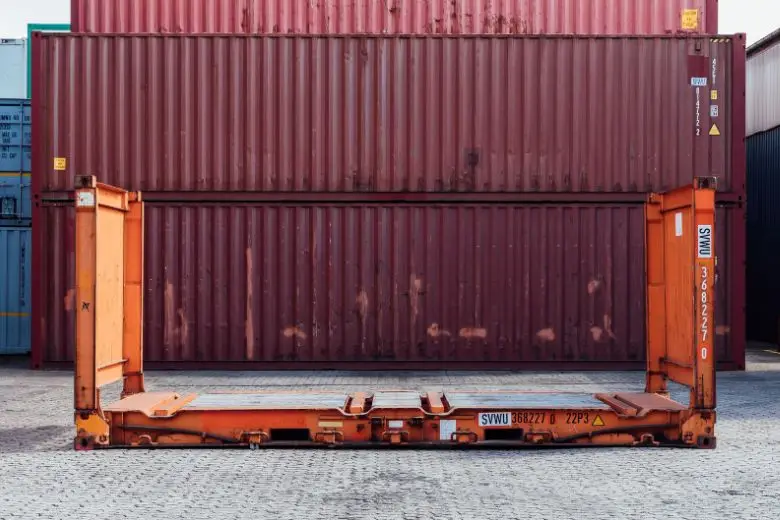
Flatrack containers are indispensable when it comes to transporting heavy, oversized or irregularly shaped goods. Thanks to their open design, they offer maximum flexibility in loading and unloading and are used worldwide in project, heavy-duty and industrial logistics. You can buy flatrack containers in various sizes and designs in our store.
- What is a flatrack container?
- Structure and variants
- Dimensions and available sizes
- Advantages
- Typical areas of application
- Buy flatrack containers – new or used
- Frequently asked questions – FAQ
What is a flatrack container?
A flatrack container is a special ISO container without side walls and without a fixed roof. It consists of a stable floor platform and two end walls that secure the load. This open design allows goods to be loaded from the side or from above, which is not possible with standard containers.
Flatrack containers are used wherever conventional sea containers reach their limits – for example with particularly wide, high or heavy freight.
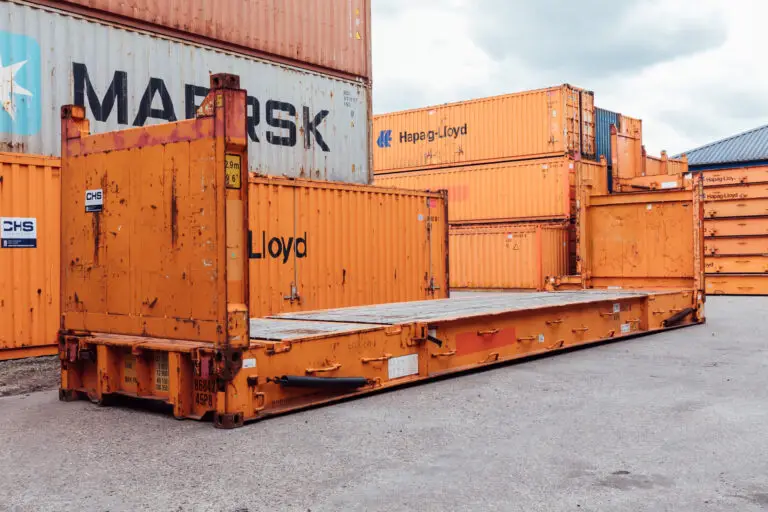
40ft Used Flat-Rack Container

20ft Used Flat-Rack Container
Structure and variants of flatrack containers
Standard flatrack container
This version has fixed end walls and a robust steel construction. It is particularly suitable for heavy machines, parts and industrial components.
Collapsible flatrack containers
In this version, the end walls can be folded in. This saves space when storing and returning empty containers and reduces logistics costs – an advantage that is particularly relevant in international transport chains.
Dimensions and available sizes
Flatrack containers are available in standardized ISO dimensions:
20 foot flatrack container
- Ideal for heavy individual goods
- High load capacity with compact length
- Frequently used for machines, motors or steel parts
40 foot flatrack container
- For long or particularly large loads
- Ideal for project loads and industrial plants
- Also available as a high-cube version
Both sizes are approved for intermodal transport by ship, rail and truck.
Advantages of flatrack containers
Maximum loading flexibility
The open sides and open top make it easy to load by crane or forklift truck.
Suitable for oversized and heavy loads
Flatrack containers offer space for goods that exceed the standard dimensions – in width, height or weight.
High load-bearing capacity and stability
The reinforced frame construction enables particularly heavy loads to be transported safely.
International applicability
As ISO containers, flatracks are approved worldwide and can be easily integrated into existing logistics chains.
Typical areas of application for flatrack containers
Flatrack containers are used, among other things, for
- Mechanical and plant engineering
- Construction and infrastructure projects
- Transportation of steel beams, pipes and components
- Project and heavy-duty logistics
- Energy, offshore and industrial goods transportation
Buy flatrack containers – new or used
Flatrack containers are available both new and used. Used flatrack containers are a cost-effective solution and are ideal for companies that require robust transportation solutions.
In our store you will find:
- 20 foot flatrack container used
- 40 foot flatrack container used
- 40 foot high-cube used flat-rack container
Additional information on container conditions, ISO standards and quality features can also be found in the news and advice section section of our website.
Frequently asked questions – FAQ
What is a flatrack container?
A flatrack container is an open transport container without side walls and roof, which is used for heavy and bulky goods.
What are flatrack containers used for?
They are used to transport machines, industrial plants, vehicles, steel structures and other oversized goods.
What is the difference between a flatrack and a standard container?
Standard containers are closed, while flatrack containers have an open design and therefore offer more flexibility when loading.
What is a foldable flatrack container?
A foldable flatrack container has folding end walls, which reduces storage and return transportation costs.
Legal notice
All information in this article is for general information purposes only. Despite careful research, we cannot guarantee that the information provided is correct, complete and up-to-date. Technical data, weight specifications and legal requirements may vary depending on the container manufacturer, design, area of application or legal regulations. The specifications of the respective manufacturer and the currently applicable legal regulations are always decisive.