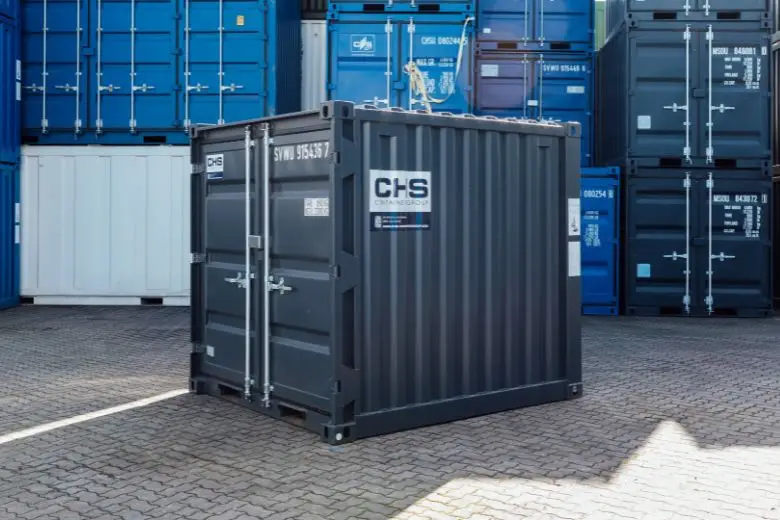
Small containers in sizes 6 ft, 8 feet and 10 feet are among the most flexible solutions for compact storage, work and technical areas. They take up little space, are easy to transport and fit into both private and commercial environments. The following overview summarizes key usage ideas, legal requirements and information on customization and purchase options.
1. properties of small containers
Compact containers are characterized by their sturdy construction, weather-resistant materials and small footprint. Due to their low weight, they can also be moved with smaller lifting equipment and are suitable for both short-term and long-term use.
2. usage ideas for small containers
2.1 Storage containers for garden and household
A mini storage container offers secure storage space for garden tools, bicycles, tools and seasonal accessories. It is more robust than conventional garden sheds and provides reliable protection against theft and the weather.
2.2 Mobile workshop containers
As a workshop container, it serves craftsmen, fitters and hobby users as a mobile workstation. Tools can be stored in an organized manner and work surfaces can be set up flexibly.
2.3 Material containers for construction sites
The material container for construction sites is suitable for storing machines, building materials or sensitive equipment. Its compact dimensions make it easy to move within different construction phases.
2.4 Event and trade fair containers
Small containers function as event containers, information stands, ticket stations or mobile stores. External surfaces can be branded and tailored to the respective application.
2.5 Office containers and home office containers
Insulated models can be used as mini office containers and offer a separate work area in a small space. They are suitable for temporary or permanent use.
2.6 Technology container
As technology containers, they offer protection for electrical distribution boards, pumping systems or IT systems. The stable construction enables safe and weather-protected installation.
3. legal aspects of setting up small containers
3.1 Authorization requirement
Whether a container requires a permit depends on the federal state, the location and the intended use.
Typical situations:
- Short-term storage: often permit-free.
- Permanent use as an office, workshop or retail space: generally subject to approval.
- Connection to electricity, water, sewage: usually subject to approval.
A check with the responsible building authority is recommended.
3.2 Fire protection and safety
Depending on use, specifications may apply regarding minimum clearances, ventilation, fire protection materials or securing against slipping.
3.3 Property and neighborhood law
In residential areas, design regulations and boundary distances must often be observed. In commercial areas, the requirements are usually less strict.
4. customizations and conversions
All customizations and conversions can be fully implemented by us. This includes, among other things:
- Additional doors, windows, roller shutters
- Electrical installation and lighting
- Insulation, interior cladding, floor reinforcements
- Shelving, workshop equipment, technical equipment
- Air conditioning, heating and ventilation
- Security technology such as reinforced locks
- Paintwork, foiling and branding
This creates a container that is precisely tailored to the desired use.
5. advantages of buying small containers
The purchase of a 6-, 8- or 10-foot container offers:
- Long service life
- Flexible transportability
- Compact dimensions
- Customizable equipment
- Wide range of applications
Our store offers models in various designs, including new, used and pre-equipped containers.
Frequently asked questions
Do I need a building permit for a container?
Yes – planning permission is often required if the container is to be used permanently, e.g. as an office, workshop or recreation room. Permission is often not required for temporary storage without a residential purpose.
How long can a container stand without a permit?
This depends on the federal state and the intended use. The rule of thumb for storage or construction site containers is a few months (e.g. up to 3-6 months) without a permit.
Can I have a small container individually converted and equipped?
Yes – conversions such as windows, doors, electrics, insulation, workshop equipment or branding are possible and can be carried out by CHS.
Where can I set up a container?
A container can be placed on a private property as long as the type of use, development plan and distances are observed. On public areas (roads, sidewalks), a special use permit or parking permit is required.
What are the possible uses for 6-, 8- or 10-foot containers?
Common applications include: Storage containers, workshop containers, material containers for construction sites, event or trade fair containers, office containers in the garden or technical containers (e.g. for pumps or IT).
Are there any special requirements for delivery and installation?
Yes – A load-bearing surface, sufficient maneuvering and delivery space, access for delivery vehicles and compliance with clearances and statics are important. You can find more detailed information here.
Legal notice
The information provided on permits, regulations and installation conditions for containers does not constitute legal advice. Responsibilities, regulations and requirements may vary depending on the federal state, local authority and intended use. For binding information, please contact the relevant authorities, in particular the local building authority.
All statements in this article are based on the generally applicable provisions of the German building regulations. Only the state building regulations (LBO) applicable in your federal state are authoritative. There is no examination or guarantee of actual approvability in individual cases. The responsible building authority must always be consulted for binding decisions.