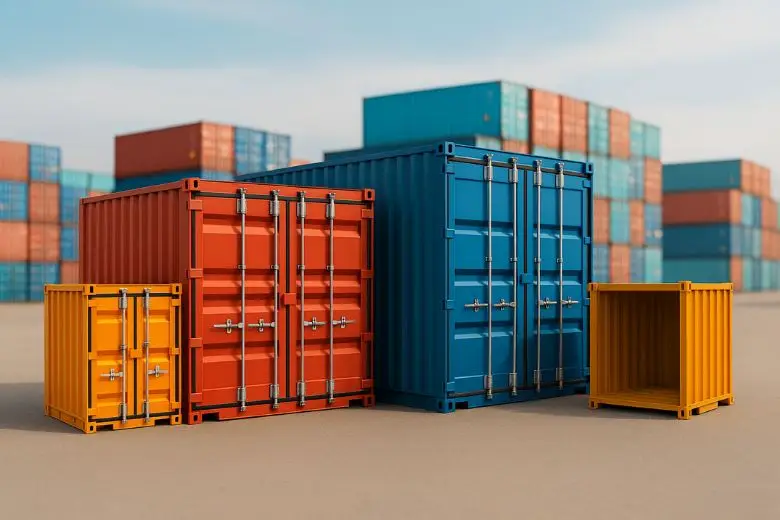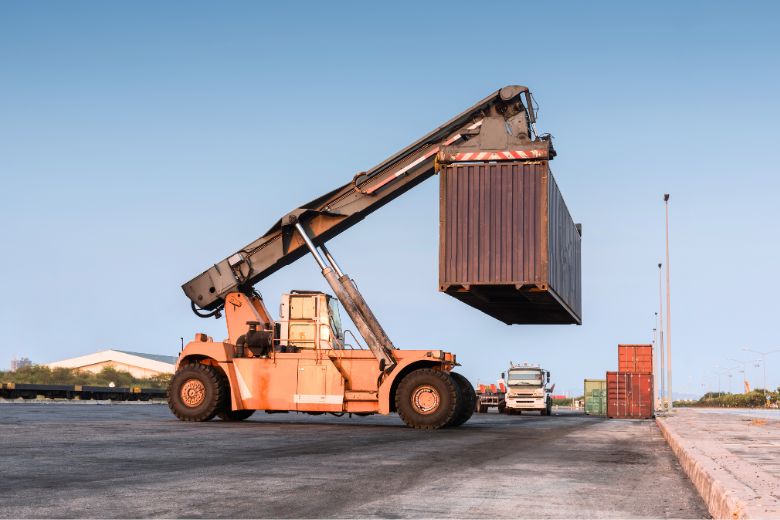
The weight of containers is a key factor in logistics, transportation, construction and international trade. Whether sea container, storage containers or special containers – the correct container weight influences safety, transport costs, permits and compliance with legal regulations.
This article clearly explains the empty weight, maximum payload, total weight of containers and relevant regulations such as SOLAS-VGM.
- What is the weight of a container?
- Weight of standard sea containers
- Why is container weight so important?
- Legal regulations on container weight (SOLAS-VGM)
- Frequently asked questions – FAQ
What is the weight of a container?
A refrigerated container (also known as a reefer container) is a temperature-controlled special container that can store sensitive goods such as food, drinks or pharmaceutical products at constantly defined temperatures. In contrast to normal storage containers, a reefer container has a permanently integrated refrigeration unit that actively regulates the internal temperature.
Refrigerated containers are generally available in the standard sizes of 20 feet and 40 feet and are suitable for stationary use, temporary storage or transport-related use
The weight of a container is made up of three standardized components:
- Empty weight (tare) – weight of the empty container without load
- Payload – Maximum permissible weight of the freight
- Maximum total weight (gross weight) – sum of unladen weight and maximum payload
This information is internationally standardized and is usually noted directly on the container door.

Weight of standard sea containers
Weight 20 feet container
The 20-foot sea container is one of the most widely used containers in the world:
- Empty weight: approx. 2,200-2,400 kg
- Maximum payload: approx. 28,000 kg
- Maximum total weight: 30,480 kg
Tip: If you are buying a container, you can find out in our guide, Buying and delivering sea containers: Comprehensive guide for Germany and Europewhat is important in addition to weight.
Weight 40 feet container
The 40-foot container offers more loading volume with a similar total weight:
- Empty weight: approx. 3,700-4,000 kg
- Maximum payload: approx. 26,000-27,000 kg
- Maximum total weight: 30,480 kg
Weight 40-foot high cube container
High-cube containers are higher than standard containers:
- Empty weight: approx. 4,000-4,300 kg
- Maximum payload: approx. 26,000 kg
- Advantage: more loading height with almost the same total weight
Weight of special containers
Containers with special dimensions have a higher tare weight due to their design:
- Refrigerated container (reefer): approx. 4,500-5,000 kg empty weight
- Open-top container: higher weight due to additional reinforcements
Why is container weight so important?
A correctly determined container weight is crucial for:
- Transport safety on road, rail and sea
- Compliance with legal regulations
- Avoidance of overloading and fines
- Stability of container structures
- Cost control for freight and handling costs
Overloaded containers represent a considerable safety risk and can lead to exclusion from transportation.
Legal regulations on container weight (SOLAS-VGM)
In international maritime traffic, the SOLAS VGM regulation (“Safety of Life at Sea – Verified Gross Mass”). It obliges shippers to determine and report the verified gross weight of a container prior to shipment. A container may not be loaded onto a ship without a valid VGM.
Frequently asked questions – FAQ
How much does an empty container weigh?
The empty weight of a container depends on its size and design. A
What is the maximum total weight of a container?
The maximum total weight of a sea container is usually 30,480 kg. It is made up of the unladen weight and the maximum payload and must not be exceeded.
What is the maximum load per container?
The maximum payload is:
- 20-foot container: approx. 28,000 kg
- 40-foot container: approx. 26,000-27,000 kg
Additional restrictions may arise due to truck, rail or national regulations.
Where can I find the weight of a container?
All relevant information such as tare, payload and gross weight is attached directly to the container, usually on the container door.
Legal notice
All information in this article is for general information purposes only. Despite careful research, we cannot guarantee that the information provided is correct, complete and up-to-date. Technical data, weight specifications and legal requirements may vary depending on the container manufacturer, design, area of application or legal regulations. The specifications of the respective manufacturer and the currently applicable legal regulations are always decisive.