Remember the days when it would’ve been unthinkable to order a 40-foot steel box online and have it delivered to your door? Now, you can buy a shipping container on your smartphone as easily as you can buy a bag of chips. It’s easy—sometimes a little too easy. And while most online container purchases are straightforward, scams can happen in any market, and even careful buyers can be caught off guard by a convincing listing.
This guide covers how to evaluate container sellers, understand the product you’re buying, and protect your money from start to finish.
But first, some context.
Why Do Online Container Scams Exist?
There are three main reasons why online scammers are attracted to the container market.
- It’s a niche industry that largely operates offline. This can make it difficult for first-time buyers to know what’s standard practice and what deserves a closer look.
- Containers are high-value, once-in-a-lifetime purchases. Most people buying containers for their personal use only need to buy once. As a result, they often have limited familiarity with legitimate brands and dealers.
- There’s a gap between payment and delivery. Because customers don’t expect their container to be delivered Amazon-fast, fraudulent sellers have more time to stall or disappear before a buyer realizes something is wrong.
Avoiding Container Scams: A Step-by-Step Guide
Step One: Vet the Seller
Before diving into discussions about price or availability, make sure the company you’re considering buying from is a legitimate dealer with a verifiable business history.
Check the Website
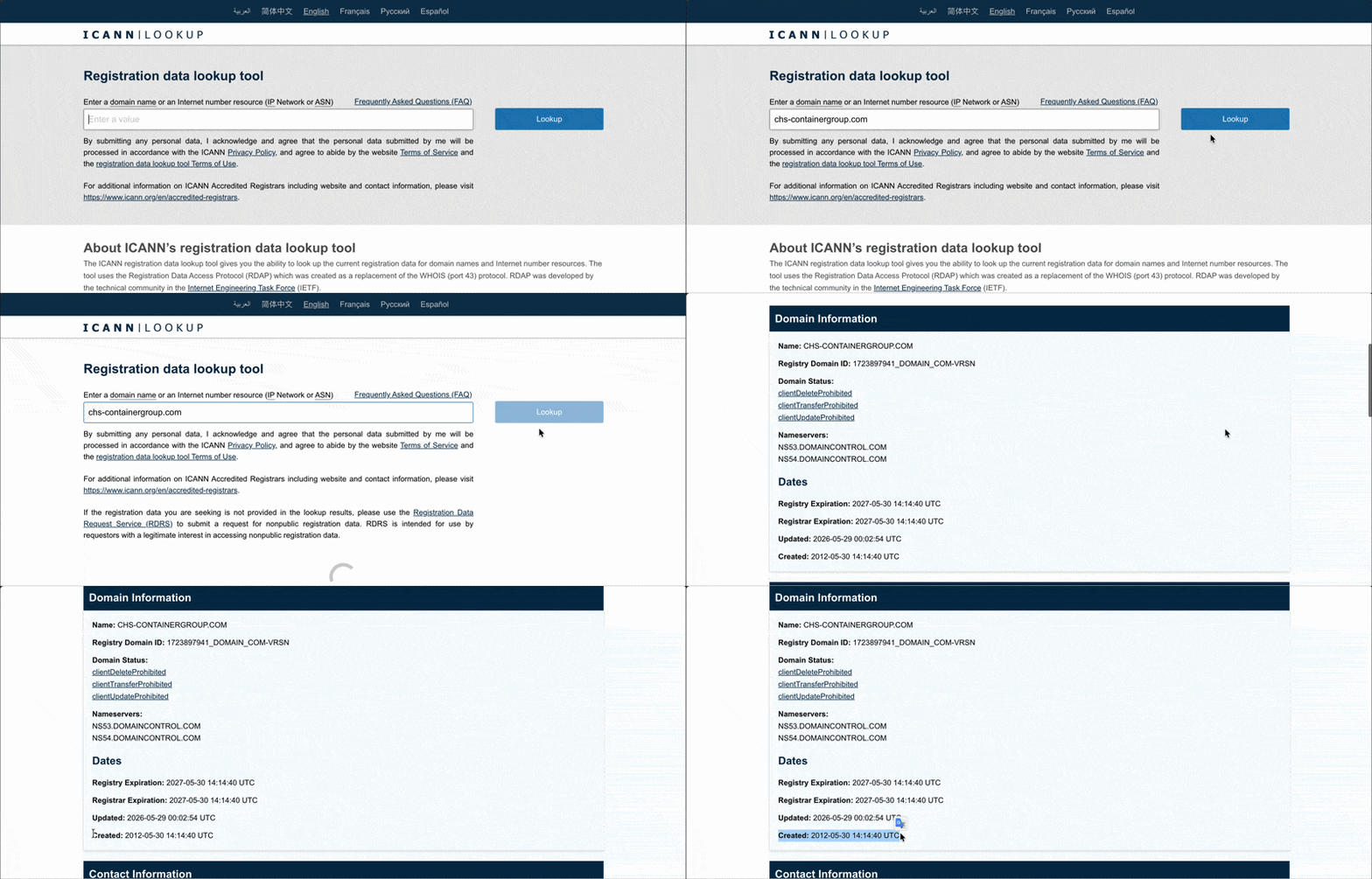
A legitimate container business, no matter their size, should have an established online presence. You can check when a website domain was first registered using free tools like Whois or ICANN Lookup. It doesn’t require an account and takes seconds. Although a recently registered domain is not an automatic disqualifier—new container businesses are started all the time—it is a good reason to dig a little deeper before making a purchase from them.
It’s also important to take a critical look at the website content itself. While many established container businesses run functional, no-frills sites, they should all have evidence of a good reputation, clear contact information, a physical address, and signs of a real team behind the business. Look for an About Us page, with employee names and real team photos. If team members are listed, check whether those employees also appear on credible networking sites, like LinkedIn.
Read the Reviews
If the seller features reviews on their website, make sure they link to legitimate review platforms or external sources that have been around for a while. A scam site may screenshot the reviews from a legitimate company’s customers and misrepresent them as their own.
Then, check for recommendations beyond the seller’s website. Research reviews across multiple platforms, including Trustpilot, Google, and relevant communities like r/shippingcontainerhomes on Reddit.
Look for patterns over time rather than isolated comments. If you can’t find any existing feedback about a specific seller, consider posting a question in a relevant online community or forum. Others who have dealt with that company may be able to share their own experiences. Nextdoor and Facebook groups can also serve as helpful resources.
Verify Credentials
Check whether the seller appears in recognized industry or business directories, like the Better Business Bureau (BBB). A container seller that has achieved BBB accreditation has been thoroughly vetted by the organization, and agreed to adhere to its code of conduct. You can also search known container scams through the Better Business Bureau’s Scam Tracker. Additionally, the National Portable Storage Association (NPSA) offers a tool that buyers can use to search for local container and storage providers.
No single listing or accreditation proves a seller is legitimate on its own, but if you can’t find the company in any external directories, review platforms, or other industry resources, it’s a cause for concern.
Step Two: Understand What You’re Buying
Some online container scams may actually result in you receiving a container—but in a different (lesser) condition to what was advertised. Understanding common grades and terminology used in the container industry can help you make good purchasing decisions and push back when something’s not quite right at delivery.
Used Container Grades
Used shipping containers come in a variety of ratings or grades, with some slight variance between sellers. Knowing what you’re buying—and what condition to expect—is just as important as vetting the seller.
The table below outlines the most common container grades and what they typically mean in practice.
| Grade | What it Means | What to Expect |
|---|---|---|
| IICL/Multi-Trip | Used, but still meets IICL and CSC survey requirements. | Small areas of superficial rust may be present. Minor dents, and scuffs are acceptable. Floor and seals are intact. |
| Cargo-Worthy | Well-used, but still meets CSC survey requirements. | Superficial rust, dents, and scuffs are normal. Floor and seals are intact. |
| Wind & Watertight (WWT) | No longer eligible for shipping; not recommended for stacking. | Superficial rust, dents, and scuffs are normal. Floor and seals are intact. |
| As-Is | Sold “as-is”; no guarantee on condition. | Possible holes, heavy rust, and structural damage. Inspect thoroughly before purchase. |
Surface rust on a used container is normal and does not indicate a problem. Structural issues, like holes, compromised floor sections, and failed seals, should only be expected if the container is being sold in “as-is” condition.
Before committing to a purchase and making any payments, confirm the grade and condition of the container in writing. If a seller is vague about either one, it’s probably best to find a different seller to work with.
Market Price
Once you understand the grade of container you’re looking for, pricing becomes much easier to evaluate. One benefit of the growing U.S. container market is that buyers have plenty of vendors to choose from and legitimate listings to compare against.
Before committing to a purchase, check prices from several reputable sellers for the same container size, grade, and delivery area. If the listing is significantly lower for a container in the same condition—especially with delivery included—it’s a red flag.
Step 3: Protect Your Payment
Paying by cash can be convenient, but it offers no protection once it changes hands. For a high-value purchase like a shipping container, it’s worth using a payment method with a built-in dispute mechanism in case something goes wrong.
Buying a Shipping Container: Common Payment Methods
- Credit and debit cards: Many credit card (and some debit card) providers offer chargeback protection if goods are not received or are materially misrepresented. Check your provider’s policy before paying.
- PayPal: Buyer protection may cover non-delivery and significant item condition disputes.
- Bank transfer or cash: Avoid these for container purchases from any seller you have not previously worked with. Recovery is limited and often slow.
Walk away from sellers who insist on cash or cash apps like Zelle or Venmo. A reputable business should offer payment methods that include some form of buyer protection.
Pre-Purchase Checklist
| Seller has an established web presence; domain age verified | ✓ / X |
| Reviews checked across Trustpilot, Google Business, and Reddit | ✓ / X |
| Is a member of the NPSA or similar industry association | ✓ / X |
| BBB listing or equivalent accreditation confirmed | ✓ / X |
| Container grade is clearly specified in writing | ✓ / X |
| Payment method offers chargeback or buyer protection | ✓ / X |
| Physical inspection arranged or detailed photos/videos requested | ✓ / X |
| Delivery logistics confirmed (who is responsible and when) | ✓ / X |
Step 4: Ask to Inspect Before You Commit
Container sellers typically fall into three categories: local dealers with a physical yard, brokers who operate regionally or nationally, and private sellers on marketplaces or auction sites. The inspection process depends on the type of seller you’re working with.
Local Dealers
If you’re working with a local dealer, ask to visit their yard. Inspect the container in person before finalizing payment, and confirm that the unit you’re viewing is the exact one that will be delivered. Some depots are not open to the public for insurance reasons. This is a relatively common practice, and is not necessarily a red flag.
CHS Container Group USA’s depots in Memphis, TN, and Charlotte, NC, are open to the public—though we ask that you call ahead to avoid long waiting times. If you’re purchasing in either market, you can inspect your container in person before committing. Contact us to arrange a visit.
Brokers
A broker may not have a physical yard for you to visit or know exactly which container you’ll be receiving. This isn’t cause to suspect a scam—it just means they are sourcing the container from another supplier to fulfill your delivery, and can’t guarantee the exact unit that will arrive. When buying from a broker, it’s especially important to inspect the container prior to being placed on your property (more on that below).
Private Sellers
Private sales require the most caution. If you’re buying a container through auction sites or forums like Facebook Marketplace, definitely inspect the container in person before paying. If you can’t inspect it, request detailed photos and a video walkthrough of the specific unit, including the roof, floor, door seals, and any visible wear and tear. A reverse image search can help you confirm if the photos have been lifted from another list.
Step 5: Document the Delivery
If your container is being delivered to a location other than where you live, it can be logistically challenging to coordinate being at the drop-site for the delivery. Nonetheless, it’s essential to be present when your container is delivered, and inspect it thoroughly before signing any delivery paperwork. Check the container while it’s still on the truck, and again once it’s on the ground. Pay special attention to the walls, door seals, and how the doors open and close. Used container doors can be stiff and difficult to open, but they should still be functional (unless the container was clearly sold as-is). If it’s safe to do so, step inside the container, close the doors, and check if any light enters it through pinholes.
To support your inspection, take photos and videos of the container’s condition upon arrival. Many reputable container companies ask their drivers to do the same, so request copies of those as well if you can. Having these available can help protect you if an issue arises after delivery.
Step 6: Delays vs. Red Flags
Container availability can quickly shift with demand, and restocking—especially of rarer units—may take time. As a result, delays between placing your order and having it delivered can occur. What matters is how the seller communicates with you while you wait.
A legitimate seller should be able to explain the delay, provide a realistic updated timeline, and keep you informed. Conversely, a drop in communication or attempt to hide or obscure information could indicate a scam.
| Legitimate Delays | Red Flags |
|---|---|
| Seller proactively communicates a timeline and updates you when it changes. | Communication becomes infrequent or stops after payment. |
| Delay is explained with reference to specific supply or logistics constraints. | Excuses are vague or shift each time you follow up. |
| Seller can confirm the container exists and provide documentation. | Seller cannot produce photos, container ID, or depot location. |
| One delay, clearly communicated, with a revised date. | Repeated delays with no clear end point. |
| Seller offers to hold the unit or adjust terms while you wait. | Seller pressures you to wait without any documentation or recourse. |
If you experience red flags like those listed above, consider consulting with your payment provider who will advise whether you should initiate a chargeback or payment dispute. The longer you wait, the slimmer your chances of getting your money back.
Step 7: If You’ve Been Scammed
If you’re worried that you have been the victim of a container scam, start by gathering all documentation: correspondence, payment receipts, listings, photos, and any delivery or tracking information. Before taking action, make sure you’ve given the seller a reasonable opportunity to respond. Delays and miscommunication can happen, and you don’t want to escalate things prematurely if the issue can be resolved.
If the seller is being unresponsive and you still have concerns, take the following steps:
- Initiate a payment dispute: Contact your card provider or PayPal immediately and give them your documentation. Most providers have defined windows for chargeback claims, so notify them immediately that you suspect you’ve been scammed.
- File a BBB complaint: If the seller had a Better Business Bureau listing, filing a complaint creates a public record and puts formal pressure on the business to respond.
- Report the website: If the site appears to be fraudulent, identify the hosting provider by using a Whois lookup or a tool like BuiltWith and file a report. Hosting providers take fraud reports seriously and can suspend the site, preventing others from being targeted.
- Consider small claims court: For significant losses, small claims is a realistic option. Your documentation is your case.
A Note on Buying Guarantees
Some sellers advertise lifetime guarantees. Be sure you understand what that actually covers before relying on it. In most cases, a guarantee on a used container does not mean the seller will accept a return or offer a replacement after extended use—it typically covers specific structural defects within a defined period. Always ask for the terms in writing.
Buying a shipping container online doesn’t have to feel risky. Most sellers are legitimate, and most purchases go smoothly. The key is knowing what to check before you pay, what questions to ask, and what warning signs to look out for during the shopping and purchasing process. A little preparation can help you feel confident from the first quote to final delivery.
Ready to start shopping with CHS Container Group USA? Browse our nationwide container inventory today.