AR
AR  BR
BR  DE
DE  UY
UY 
Researching your first shipping container purchase? You’ve likely run into a tangle of terms such as “IICL,” “one-trip,” and “wind & watertight”—each used to describe a container’s condition or grade. In this guide, we break down the most common container grades in plain English, explain how they differ, and outline what to consider when choosing between them.
The Most Common Shipping Container Grades
You might be surprised to learn that there is no official global standard for grading shipping containers. In intermodal transport, containers are evaluated based on criteria that either preserves longevity for lessors (IICL-6) or ensures seaworthiness (CSC surveys). But for domestic storage and general resale, the industry relies on widely accepted measures including age, condition, structural integrity, and service history.
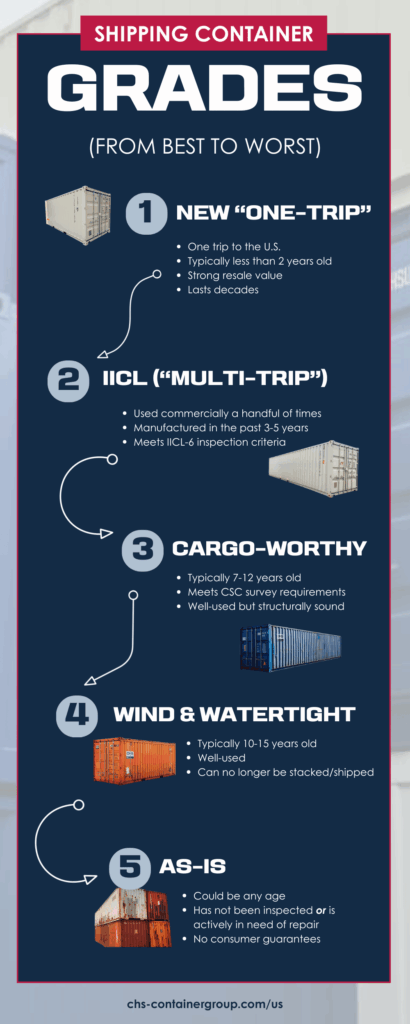
Terminology can also vary by region. In the U.S. market, five container grades are commonly available, listed here from newest to oldest:
- New containers (“one-trips”)
- IICL containers (“multi-trips”)
- Cargo-worthy containers
- Wind & watertight containers
- As-is containers
Below is a breakdown of each grade and what it means for you.
New Shipping Containers (“One-Trip”)
Key Features
- One intermodal trip to the U.S.
- Typically less than 2 years old
- Strong resale value
- Can be used for decades
What they look like
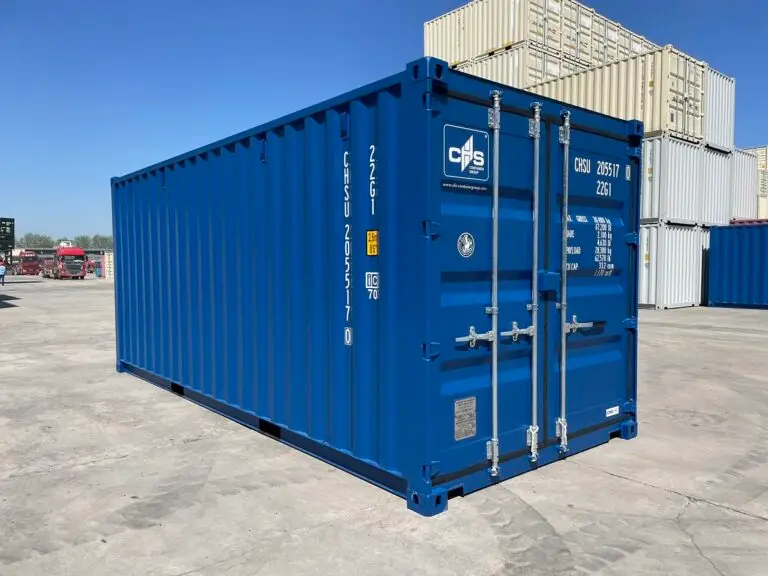
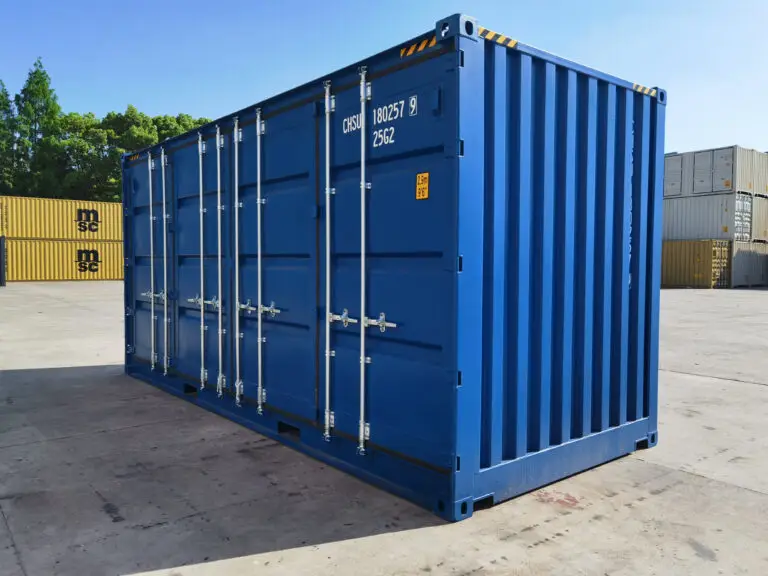
One-trip containers are the newest available for sale. Most are manufactured in beige (RAL 1015), though colors like dark blue, red, and grey are also common. They usually do not carry shipping-line logos—though it is a possibility. And while they are in excellent condition, minor scuffs or small dents from their single ocean journey are normal.
Features and build
One-trip containers come in two subcategories: storage-spec (also known as “trading-spec”) and shipping-spec (also called “leasing-spec”).
Storage-spec containers are made for domestic use and are easy to access and secure from the ground—they include features like a lockbox, easy-open door handles, and forklift pockets.
Shipping-spec containers are built for intermodal shipping and may not include all of the same features. However, the steel is slightly thicker in shipping-spec units (1.6 mm versus 1.2 mm for storage-spec), making them better suited for repeated transport.
Why they’re called “one-trips”
Because almost all containers are manufactured in China, they must make at least one loaded voyage before being sold in the U.S. This avoids the cost and footprint of shipping an empty unit.
Uses
New containers are suitable for any storage, shipping, or building application. They are the only grade we recommend for multi-story construction and are commonly used in the creation of modular self-storage facilities.
Grade Examples
New Shipping Containers for Sale
IICL Shipping Containers (“Multi-Trip”)
Key Features
- Used commercially a handful of times
- Manufactured within the past 3-5 years
- Meets IICL-6 inspection criteria
IICL containers have been inspected and meet—or have been repaired to meet—the IICL-6 Inspection Criteria set by the Institute of International Container Lessors. The inspection checks structural components, verifies dimensional tolerances, and flags signs of overloading or mishandling.
In circumstances where cargo residue could damage the container or leave odors, IICL-6 also provides clear guidance for how containers should be sanitized.
Why they’re called multi-trip
They’ve made several trips, but not enough to fall into the broader “cargo-worthy” category detailed below. They meet stricter criteria and typically remain in very good condition.
Uses
IICL containers are ideal if you want a “gently used” unit without paying for a one-trip. They can be used for storage, shipping, leasing, and many modification projects.
Appearance
IICL containers come in a range of colors and may have shipping-line or leasing-company logos on them. They may have wear typical of early-stage use, but any indentations or scratches must fall within IICL-6 limits.
Cargo-Worthy Shipping Containers (“CW”)
Key Features
- Typically 7–12 years old
- Meets CSC survey requirements
- Well-used but structurally sound
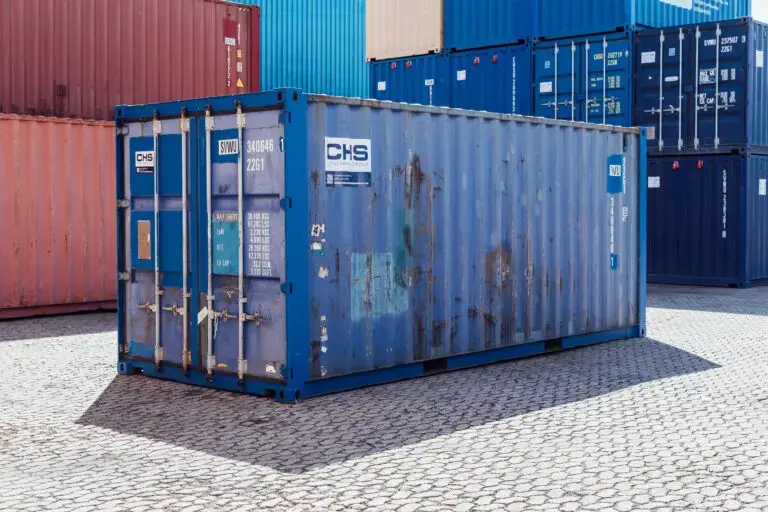
Cargo-worthy containers are used units still considered seaworthy and safe for stacking. They can be certified (at an additional cost) for at least one more international shipment, though they are best regarded as a short-term shipping solution.
Uses
Cargo-worthy units are suitable for domestic storage and basic DIY projects such as sheds or workshops. They can still be used for shipping with a valid CSC inspection.
Appearance
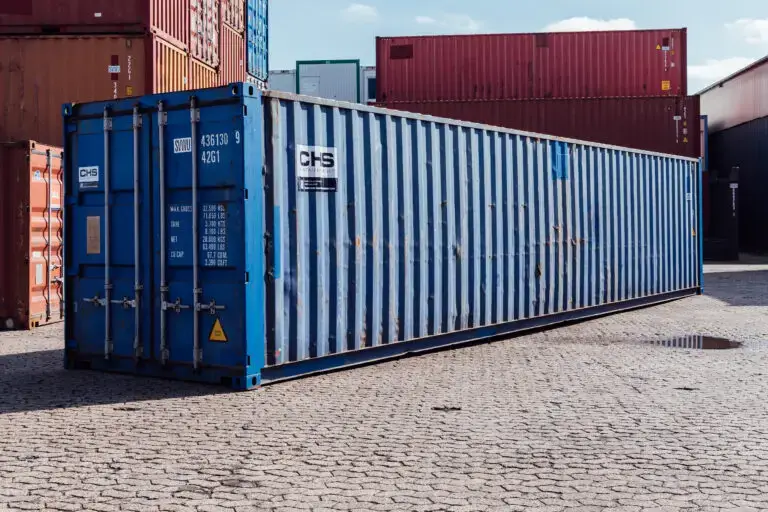
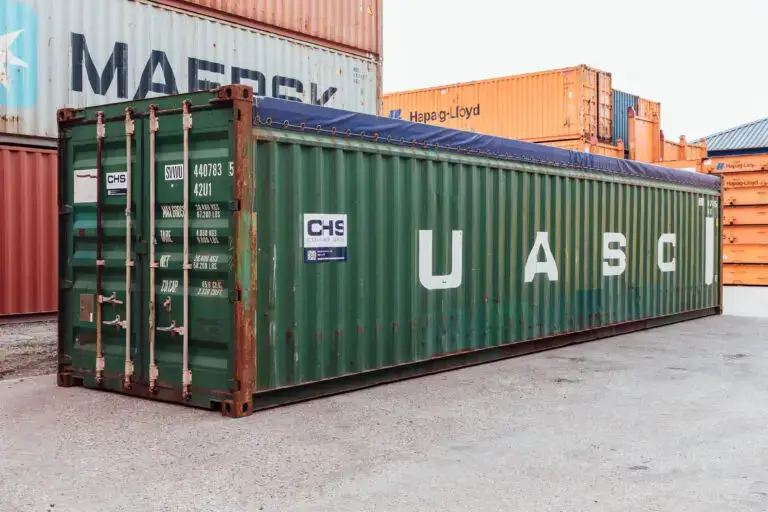
Cargo-worthy containers almost always have large shipping-line logos. They show normal signs of extended service—scratches, surface rust, and dents—but cannot have holes, damaged flooring, or extensive roof bowing.
Grade Examples
Seaworthy Shipping Containers for Sale
Wind & Watertight Shipping Containers (“WWT”)
Key Features
- Typically 10–15 years old
- Well-used
- No longer eligible for stacking or shipping
Wind & watertight containers are the most common used containers available. While they’re no longer seaworthy, they’re a highly effective option for stationary storage. At this point in their lifecycle, it’s best to minimize movement post-delivery, as ongoing movement and handling at this stage can lead to warping.
Uses
Wind & watertight containers work well for general storage, provided they stay in one location. Light modifications like vents or shelving are often fine, though they aren’t recommended for structural building projects.
Appearance
Expect noticeable aging: faded paint, rust patches, dents, and visible branding. However, they must not have holes, and rust should not be penetrating. When the doors are closed, you shouldn’t see light coming through. As with cargo-worthy units, keeping them stationary extends their lifespan.
As-Is Shipping Containers
As-is containers come with no guarantees. They may have holes, significant rust, bowed roofs, or broken flooring. They are sold this way because it is no longer cost-effective for the owner, be it a shipper or a lessor, to repair them.
Some container yards repair as-is units to wind & watertight condition; others sell them exactly as received.
Uses
Despite their condition, as-is containers still have value. They’re commonly used for:
- Temporary barriers or walls
- Welding practice
- Training exercises or target practice
- Set design or props
Appearance
Anything is possible: holes, structural issues, missing flooring, or pronounced damage.
About CHS Container Group USA’s Containers
All of the used shipping containers you see listed in our online store are sold in cargo-worthy condition. This means they would pass a CSC survey deeming them seaworthy at the point of sale. If you would like us to conduct a CSC survey on your used container, please contact us prior to placing your order. Any containers listed as “new” are sold in new “one-trip” condition.
We also have IICL, wind & watertight-grade, and as-is inventory available for both wholesale and retail purchase. If you need a grade not currently listed online—or you’re interested in buying in bulk—please contact us directly.